Software and Tools
Data Quality Management Across 50 State Government Databases
By Amjid Ali · · Updated · 5 min read
In this article
The Data Quality Crisis
Aggregate unclaimed property data across fifty states and an uncomfortable pattern appears fast. Between forty and sixty percent of incoming records require correction before they are safe to search. This is not about one or two outliers. It is systemic across jurisdictions because every state maintains its own database, exports data in its own way, and follows its own rules. There is no national standard to align field names, formats, or freshness, which imposes a reliability tax on anyone trying to build a trustworthy service. Poor quality hides legitimate matches, so families never find money that could cover rent or tuition. False positives waste time and erode trust. Engineers inherit brittle pipelines that break whenever a state silently changes a column. The challenge is both technical and civic. The technical work turns chaos into a coherent schema and repeatable processes. The civic duty is to ensure the cleaned data stays accurate, explainable, and fair to the people it is supposed to help.
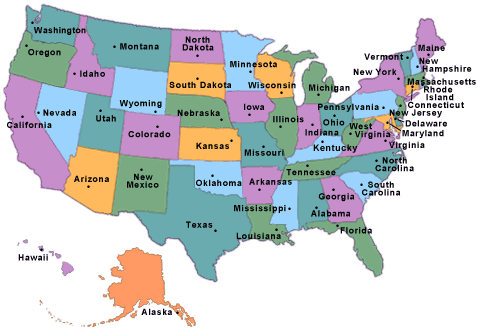
Fifty states, fifty schemas; unifying America’s unclaimed property data into one searchable map.
Taxonomy of Data Quality Issues
Name Field Problems
Names arrive in every shape imaginable. Some feeds export SMITH, JOHN, others send John Smith, and many publish uppercase only. Middle names appear as initials in one export and full strings in another. Suffixes drift between Jr., Junior, and II with no consistency. Nicknames replace legal names, married names are not backfilled, and business entries mingle legal entities with doing business as variants. Typos from manual entry are common. Historic paper scans add OCR errors that swap letters or misplace spaces. Without normalization and tolerant matching, a large share of true matches remain invisible.
Address Field Problems
Addresses reflect decades of policy, software defaults, and human habit. Apartment numbers go missing. Abbreviations swing between Street, St, and ST. PO Box formats vary. Cities rename neighborhoods, while zip codes appear as five digits in one file and nine in another. Some exports include international addresses that do not fit domestic schemas. Historic records capture addresses from the 1980s that no longer validate. Treating addresses as literal strings fragments identical locations into many nearly identical entries.
Amount Field Problems
Amounts show up as text or numbers, dollars or words, with or without symbols. Decimal precision differs. Some states record ranges such as 50 to 100 rather than a single value. Others label values with phrases like less than 100. Missing amounts are common, and a few feeds use negative numbers as internal flags. Downstream systems that compute totals or rank large claims need a single, trustworthy numeric representation.
Date Field Problems
Date formats vary from ISO to month names to ambiguous slashes. Some records lack dates entirely. Others store them as free text such as January 2020. Invalid entries like 02 or 30 slip through. Time zones are ignored. Historic dates reach back half a century and carry uncertain accuracy. Without robust parsing and provenance, timelines for escheat, notice, and claim can mislead users and reviewers.
Property Type Problems
Each state invents its own categories. Vague labels such as other hide distinct assets. Legacy codes are carried forward without public documentation. Some exports omit type altogether. Cross state search cannot rank or filter properly until categories are mapped to a unified taxonomy that explains meaning in plain language.
Missing Data
Across feeds, twenty to forty percent of records lack one or more critical fields. There is no consistent way to signal missing versus unknown versus intentionally redacted. Historic records are especially sparse. Search experiences must handle absence gracefully without pretending that empty fields are proof of non matches.
Data Quality Engineering Solutions
Validation Pipeline
The antidote to chaos is a disciplined pipeline that every record must pass. A practical flow looks like this: Raw Data to Schema Validation to Format Normalization to Business Rule Validation to Deduplication to Quality Scoring to a Clean Data Store. Keep raw and intermediate states so you can reproduce decisions and debug regressions. Make each stage observable and reversible. When a state changes an export, you want alarms to fire during validation, not after users notice bad results.
Schema Validation
Confirm shape before touching content. Verify that required fields are present, data types match expectations, and row counts align with known volumes. Reject or quarantine malformed records rather than squeezing them into the schema. Emit precise error codes and concise reports so upstream partners can fix problems at the source. Validation at the door keeps downstream code simpler and safer, and it prevents bad rows from contaminating caches.
Normalization Techniques
Normalize names into a single canonical form such as Last, First Middle while preserving the original for audit. Parse and standardize addresses using postal rules, then geocode when possible to attach stable location keys. Convert amounts to a fixed decimal representation with explicit currency and precision. Parse dates with a multi format library, store them in UTC, and keep the original strings for transparency. Map property types into a versioned unified taxonomy so changes are traceable and reversible. In production, platforms like Claim Notify use these techniques to stabilize cross state search while preserving source lineage for trust and audit.
Data Enrichment
Use name parsing libraries like nameparser or probablepeople to separate titles, prefixes, and suffixes. Validate and correct addresses with postal services or commercial validators. Apply fuzzy matching and phonetic keys to spot likely duplicates across states. Geocode to enable spatial analysis and distance based ranking. Where legally allowed, fill gaps from authoritative references so incomplete records become usable without guesswork. Enrichment should never hide uncertainty. Carry confidence scores forward so ranking and user interfaces can reflect them.
Operational Playbook and Metrics
Deduplication and Record Linking
Duplicate detection is a first order requirement. Start with deterministic rules to collapse exact duplicates, then layer a probabilistic matcher for cross state near duplicates. Build a composite key from normalized name, birth year if present, address fingerprint, and property type. Store link graphs so auditors and users can see why records were merged and can undo merges if needed.
Quality Scoring and Observability
Assign every record a quality score derived from completeness, parse success, and validation history. Use the score in ranking and to route low quality items to review. Instrument the pipeline with metrics on null rates, parse failures, taxonomy coverage, and drift from historical baselines. Dashboards should make it obvious when a state changes an export so engineers can respond before users feel it.
Human in the Loop and Governance
Automation does the heavy lifting, but edge cases need people. Route low confidence matches to reviewers with clear playbooks. Log every correction with who, what, and why. Publish data dictionaries, taxonomy definitions, and change logs so partners and users understand how the system works. Governance turns quality from a one time cleanup into a durable practice.
Incident Response and Rollback
Quality incidents happen. Keep feature flags for taxonomy revisions, maintain blue or green clean stores for quick cutover, and practice rollbacks. When a feed goes bad, freeze ingestion, drain queues, and restore the last good snapshot while you investigate. Communicate visibly so trust is maintained even during fixes.
Keep reading
 Software and ToolsBase44 Review: Build a Custom Internal CRM Without Managing a StackBase44 review: can its built-in backend and integrations help a small technical team build a custom internal CRM without managing a stack? · 8 min read
 Software and ToolsTop Features to Look for in a Network Operations Intelligence PlatformWhen the network drags, patience disappears fast. Users blame the app. Leaders look at IT. Your team ends up digging through logs, devices, cloud paths, · 7 min read
 Software and ToolsHow To Protect Intellectual Property Rights In Canadian Tech Employment AgreementsOwnership of ideas matters greatly to tech firms in Canada. These businesses count on unique knowledge to stay ahead while building future success. What · 4 min read