
Brazil’s commercial and industrial electricity users are under growing cost pressure from peak demand charges and time-of-use tariffs — and grid reliability remains a real operational risk. Battery energy storage systems (BESS) are gaining traction as a practical response, but the investment decision requires careful evaluation. This article walks through the core use cases, financial logic, and regulatory context to help C&I buyers decide if BESS is right for their operations.
Why C&I Users in Brazil Are Turning to BESS
The financial case starts with how Brazilian utilities bill large consumers. Peak demand charges are calculated on your highest power draw in any given month — meaning a single spike inflates your bill for the entire period. On top of that, time-of-use tariffs push on-peak rates higher during evening hours, typically between 18:00 and 21:00, making unmanaged load a recurring and preventable cost.
BESS addresses both pressures directly:
- Peak shaving. The system discharges during high-tariff windows, reducing the demand peak before it is recorded into your monthly bill.
- Backup power. Stored energy keeps operations running through grid outages without production losses or equipment damage.
- Energy arbitrage. The battery charges during off-peak hours when rates are low and discharges during on-peak hours when rates are high, capturing the price differential as savings.
For C&I operations facing high demand charges and wide tariff gaps, BESS converts a structural billing problem into a controllable cost.
How to Think About ROI and What Affects It
But how much it saves depends on your operation. The return is a function of your current cost exposure — and four variables determine where your facility lands.
Demand Charge Exposure
Demand charges typically account for 30% to 70% of commercial electricity bills in Brazil, calculated on the single highest power draw recorded in a billing month. One equipment startup or production surge sets the baseline for the entire period, regardless of how efficiently energy is used the rest of the time.
The higher that share of your bill, the more each kilowatt discharged during a peak window is worth in monthly savings. If demand charges dominate your electricity cost, build your ROI model around demand reduction first. The payback case is already strong without factoring in arbitrage.
Peak-to-off-Peak Tariff Gap
The wider the spread between on-peak and off-peak rates, the more the system earns through energy arbitrage. In Brazil, this differential varies significantly by region. For example, Bahia has a gap of BRL 3.41/kWh, followed by Pará at BRL 3.12/kWh and Sergipe at BRL 2.99/kWh.
If your region has a narrow gap, arbitrage alone will not justify the investment. Weight your model toward demand charge reduction instead, and treat arbitrage as a secondary return.
System Sizing and Integration Type
Sizing determines profitability as much as the hardware itself. The core risk cuts both ways: oversizing by 20% can extend payback by 12 to 18 months, while undersizing leaves the most expensive demand spikes unaddressed and leaves savings on the table.
Getting the sizing right starts with understanding two variables. Capacity (kWh) determines how long the system can sustain discharge, and power rating (kW) determines how much load it can offset at any given moment. Both must match your facility’s specific load profile, because a 15-minute demand spike and a 2-hour plateau require different configurations even if total energy drawn is the same.
Grid Fees
TUST and TUSD charges apply to storage assets in Brazil, and how they are applied depends on your system configuration. For behind-the-meter installations that are not centrally dispatched, fees apply on both the charge and discharge cycle. This double-charging reduces arbitrage returns and must be quantified before sizing a project.
Two configurations offer a better outcome. Storage paired with a generation facility can reduce transmission and distribution charges by up to 30% under ANEEL’s current framework. Standalone systems centrally dispatched by ONS pay network charges only as generators, avoiding double-charging entirely.
Note: ANEEL is currently developing a dedicated regulatory framework for BESS. For the latest updates on grid fee regulations.
What to Look for When Choosing a BESS System
Not all BESS products are built for the same conditions or business requirements. Before evaluating suppliers, align on four criteria that are particularly relevant for C&I buyers in Brazil.
- Scalability: Select a system that allows inverter capacity and battery capacity to be expanded independently, so the installation can grow alongside your operation without requiring a full redesign.
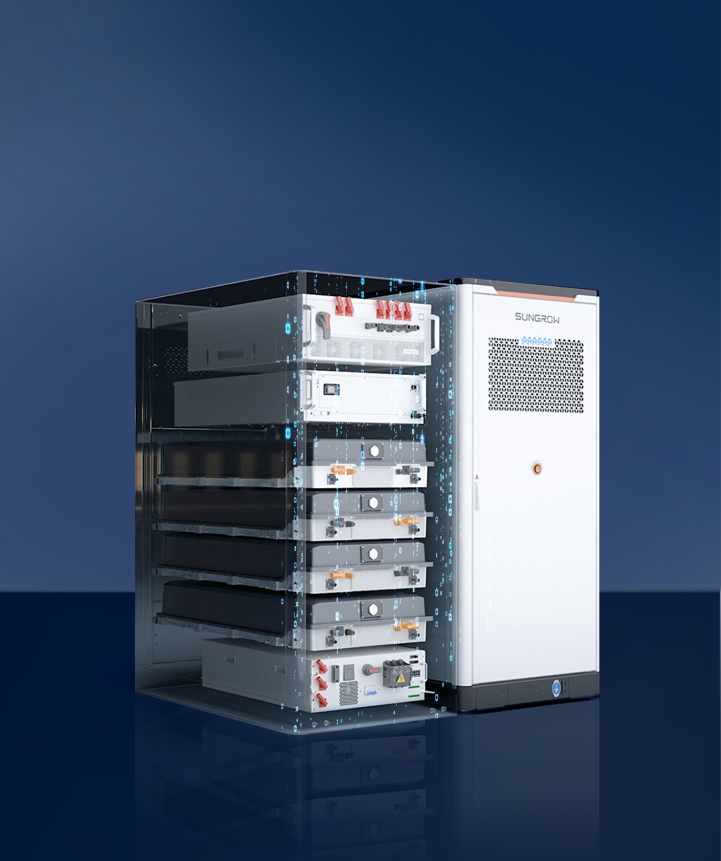
- Thermal management: Opt for liquid-cooled systems. In Brazil’s hot and humid industrial environments, liquid cooling maintains cell performance and extends product lifespan more reliably than air-cooled alternatives.
- Multi-mode support: Choose a platform that supports peak shaving, self-consumption optimization, backup power, and microgrid operation in one system, rather than separate solutions for each use case.
- Local compliance and in-country support: Require ONS grid interconnection certification and in-country technical service from any supplier under evaluation. Equipment that is not locally certified cannot be legally connected to the grid, and a supplier without local support adds operational risk over the system’s lifespan.
Sungrow: A Recommended C&I Inverter and BESS Solution for Brazil
For C&I buyers evaluating inverter and BESS suppliers, Sungrow is a practical starting point. The company operates across more than ten Latin American countries, with four facilities in Brazil and 15 GW already in operation in the Brazilian market. All inverter types sold in Brazil have passed the ONS certification process.
For buyers focused on BESS:
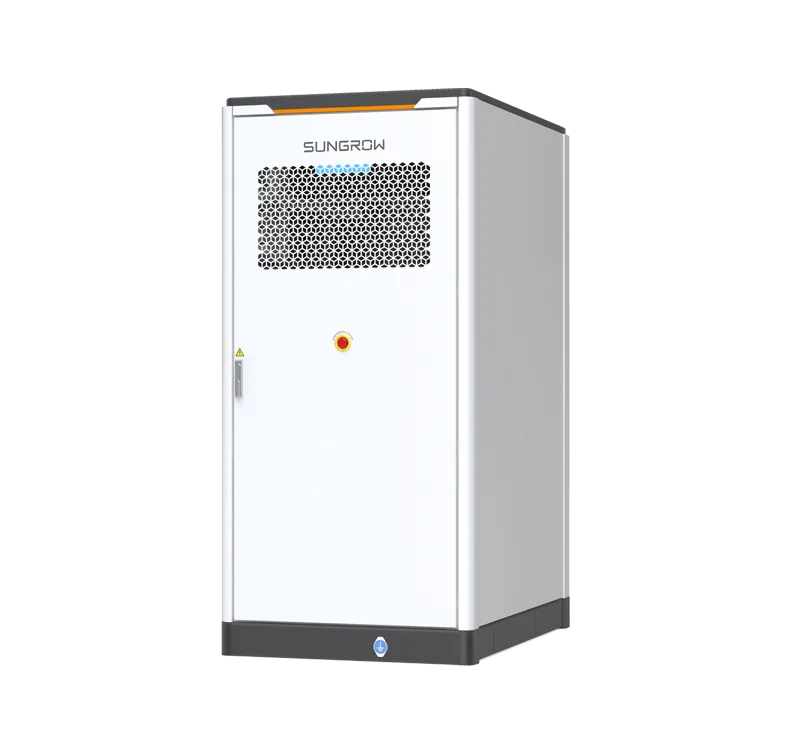
- PowerStack ST255CS (BESS). A liquid-cooled C&I energy storage system with 125 kW rated AC output and 257 kWh battery capacity, delivering over 90% round-trip efficiency and PCS efficiency exceeding 98.5%. It supports peak shaving and backup power, with grid-forming technology for both grid-tied and off-grid operation. Up to 25 units can be paralleled for larger capacity needs. System commissioning takes as little as 2 minutes via one-click setup.
For buyers adding on-site solar to their storage system:
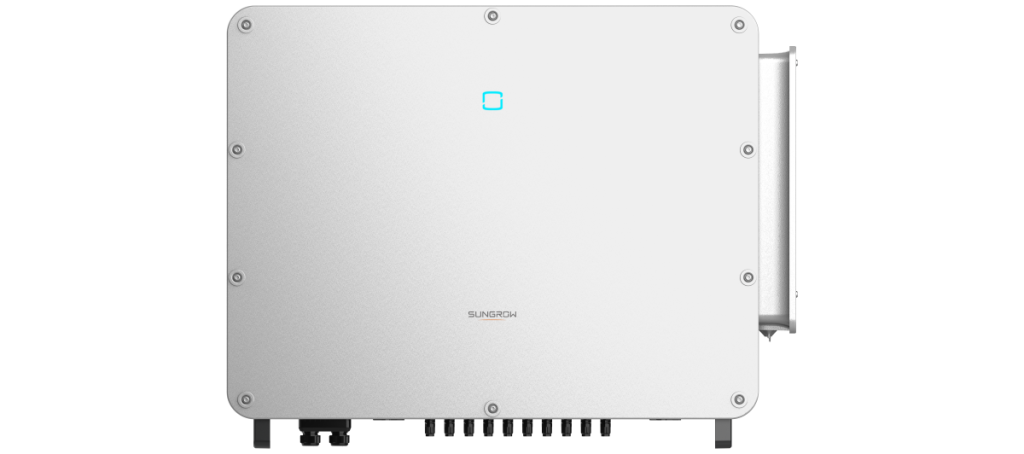
- SG125CX-P3 (Inverter). Compatible with the PowerStack ST255CS for an integrated solar-plus-storage system, the SG125CX-P3 is a 125 kW three-phase C&I string inverter delivering up to 98.5% conversion efficiency. Features SG ECOOLIN® advanced thermal management, a patented anti-condensation design for high-temperature and high-humidity environments, IP66 + C5 anti-corrosion protection, and a 25-year design lifecycle. Advanced global MPPT scanning enables over 2% higher energy yield under partial shading or multi-orientation conditions.
Make the Switch: Smarter Storage, Lower Costs
For C&I buyers in Brazil navigating demand charges, tariff volatility, and grid reliability risks, BESS represents a proven and financially justifiable solution. Sungrow’s PowerStack ST255CS and SG125CX-P3 deliver the scalability, thermal resilience, and regulatory compliance that Brazilian industrial environments demand. With 15 GW already operational in Brazil and full ONS certification, Sungrow is a trusted partner for your energy storage journey. Contact us today to request a customized ROI assessment for your facility.
References
- https://www.saurenergy.com/solar-energy-news/sungrow-inverters-get-approval-by-brazils-national-grid-operator-9605383
- https://www.energiaestrategica.com/strategicenergy/en/notes/sungrow-strengthens-its-position-in-latin-americas-energy-storage-market-securing-10-gwh-and-consolidating-its-chile-hub
- https://www.prnewswire.com/news-releases/sungrow-unveils-sg125cx-p3-ci-inverter-at-solar–storage-live-africa-2026-302727061.html
- https://canalsolar.com.br/en/aneel-installation-guidelines-for-storage-systems/
- https://www.trade.gov/market-intelligence/brazil-energy-battery-storage-auction
- https://e-greenify.com/news/brazil-adopts-regulatory-framework-for-energy-storage-systems/
- https://www.ess-news.com/2026/06/03/brazil-approves-regulatory-framework-for-energy-storage-systems/
- https://odysseyenergysolutions.com/news-insights/brazils-energy-transition-enters-a-new-phase-and-storage-moves-to-the-center
- https://www.ess-news.com/2026/06/11/brazils-solfacil-launches-financing-line-for-commercial-and-industrial-bess-projects/
- https://canalsolar.com.br/en/Understanding-how-to-size-hybrid-battery-systems/