Web and Marketing
Search Engine Optimisation Strategy: On-Page, Off-Page, And Technical Essentials
By Amjid Ali · · Updated · 3 min read
In this article
Featured image:

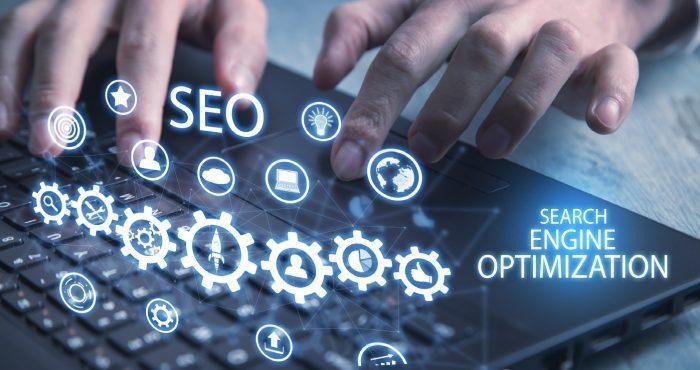
An SEO strategy is essential for enhancing a website’s presence and ranking in search engine results. It integrates several components: on-page SEO focuses on enhancing content and keyword usage, off-page SEO works on establishing authority through backlinks and brand recognition, and technical SEO guarantees that search engines can access, index, and rank the site properly. When combined, these elements form a cohesive strategy that fosters lasting organic growth.
Set objectives and understand the SERP
- SEO and Business Objectives: Establish quantifiable SEO targets linked to sales, lead generation, and brand expansion.
- Target Audience and Purpose: Identify user groups and their search motivations to inform content strategy.
- Competitors and Search Results: Evaluate rivals and search engine results pages to pinpoint content opportunities.

On-page optimisation essentials
Keyword Research and Mapping
Begin by analyzing search volume, competition, and seasonal trends, then enhance with opportunities in semantic SEO. Assign primary and secondary keywords to each page, integrating them naturally into headings, text, and multimedia.
Content Structure, E-E-A-T, and Semantic SEO
Implement a single H1 tag per page, organizing content into logical H2 and H3 sections. Establish Experience, Expertise, Authoritativeness, and Trust through bylines, citations, and appropriate schema markup.
Internal Linking, Breadcrumbs, and Anchor Text
Adopt a hub-and-spoke strategy that links central pages to related clusters. Incorporate clear anchor text and breadcrumb navigation for improved user experience and contextual relevance.
Media Optimization, UX, and Accessibility
Enhance images and videos with alt tags, captions, and compressed sizes. Prioritize quick loading speeds, user-friendly templates, and strong accessibility features to increase user engagement.
Off-page authority and trust
Content-Driven Link Building and Digital PR: Generate backlinks by creating insightful studies, innovative tools, and valuable resources that appeal to journalists and content creators.
- Link Relevance and Classification: Employ appropriate and organic anchor text while tagging sponsored or user-generated links with nofollow attributes.
- Brand References and Local Search Optimization: Convert brand mentions into hyperlinks, oversee your reviews, and ensure your Name, Address, and Phone number (NAP) remain consistent.
- Social Engagement and Promotion: Distribute your content across social media platforms to enhance visibility and create more linking opportunities.
Technical foundations: crawlability and indexation
Manage the way search engines navigate your website with a robots.txt file to restrict access to sensitive or duplicate sections, optimizing your crawl budget. Utilize an XML sitemap to showcase essential pages, canonical URLs, modification dates, and their importance. Enhance crawl efficiency by resolving issues such as infinite facets, session IDs, and pagination loops that can ensnare bots.
Ensure URL cleanliness by standardizing formats — such as trailing slashes, lowercase paths, and query parameters. Use 301 redirects when migrating or merging pages, and apply rel=”canonical” tags to mitigate duplicate content issues. Regularly review your indexing status in Google Search Console, verify any restrictions from robots.txt or noindex tags, and confirm that Googlebot can access and render all vital content, including elements generated by client-side JavaScript.
Technical foundations: architecture, performance, and security
Develop a flexible site architecture that aligns with your content themes. Ensure that important pages are easily accessible within the navigation, create internal links between related articles, and establish a clear structure in your directories and URLs.
Prioritize Core Web Vitals such as LCP, CLS, and INP for optimal performance and provide a mobile-friendly experience with consistent content and structured data across platforms. Review JavaScript and CSS to guarantee that essential content loads swiftly, utilizing server-side or hybrid rendering if necessary. Implement structured data relevant to the page’s function (such as Product, Article, FAQ, Breadcrumb, Organization) and verify its effectiveness using Google’s Rich Results Test to improve chances for enhanced search appearances.
Governance, resources, and workflows
Roles, documentation, and Search Essentials
Create checklists based on Google’s Search Essentials to keep teams aligned on crawling, indexing, and content policies. Maintain living documentation for migrations, canonicals, redirects, structured data, and site structure decisions.
Working with developers and CMS constraints
Bridge SEO requirements with engineering realities. Use tickets that state the problem, expected search impact, and acceptance criteria. Ensure your content management system exposes fields for titles, descriptions, schema, and breadcrumbs.
Training and relevant resources
Invest in ongoing education using Google Search Central resources, updates from Google, and reputable third parties. Curate relevant resources for editors and engineers—including examples from Wikipedia’s entity pages—and encourage advanced SERP analysis with operators like site:wikipedia.org. For professional guidance and strategy execution, see Search Engine Optimisation.
Keep reading
 Web and MarketingThe Triple-A Framework: How to Improve Brand Visibility in AI Search EnginesIt’s 2026. If your marketing strategy still revolves around keyword density, ten blue links, and traditional search engine results pages (SERPs), your · 8 min read
 Web and Marketing20 Essential WooCommerce Plugins for Building a Secure, Efficient, and Profitable StoreWooCommerce powers a significant share of online stores because it is free to get started, flexible, and highly extendable. However, that flexibility can also · 17 min read
 Web and MarketingAEO and GEO: How Australian Businesses Get Cited by AI SearchA practical guide to AEO and GEO: what they are, how they differ from SEO, and the exact steps to get cited by ChatGPT, Perplexity and Google AI Overviews. · 3 min read