Gadgets and Devices
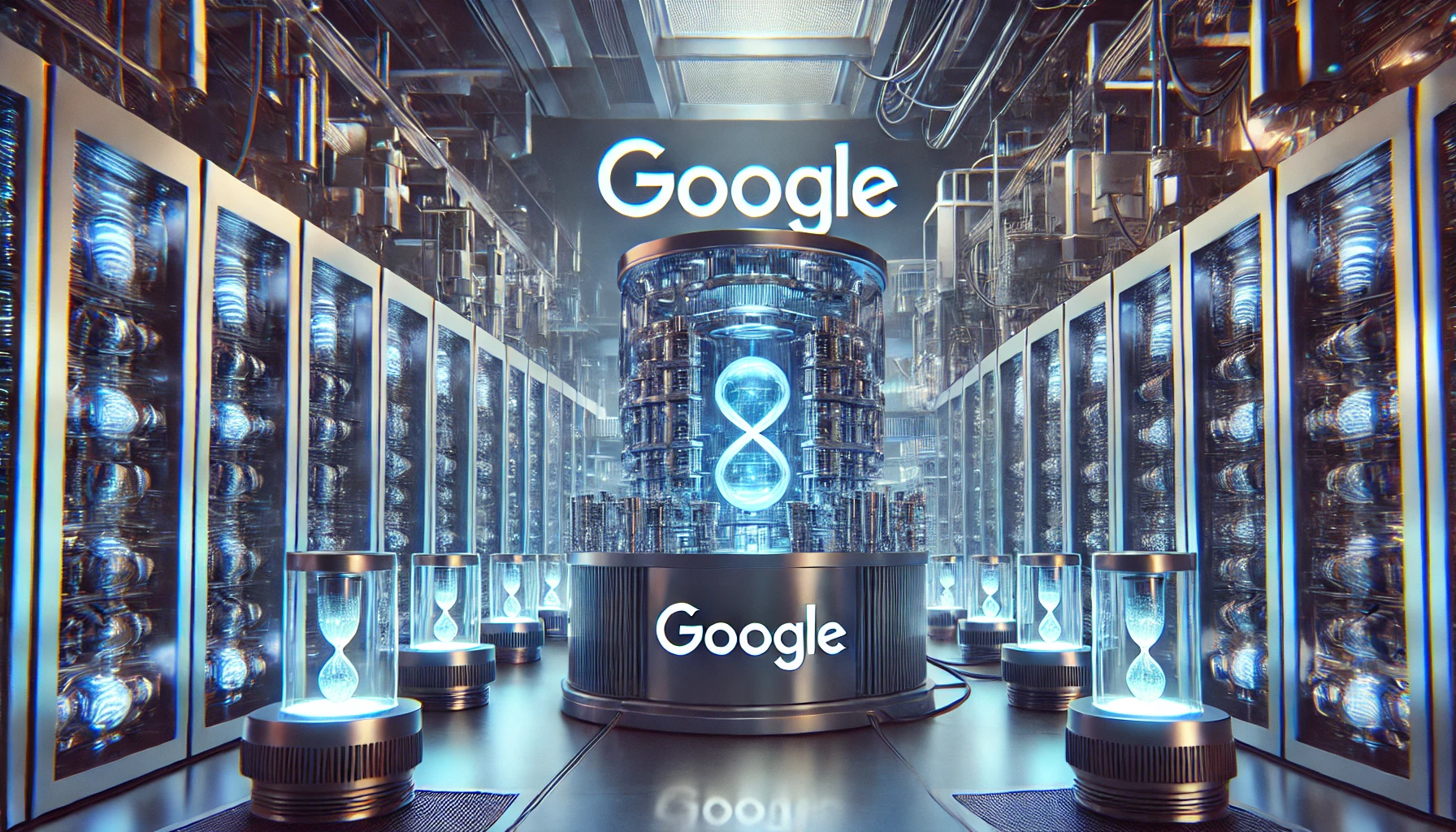
Willow: Google’s Quantum Leap That Could Reshape Enterprise IT
By Amjid Ali · · Updated · 3 min read
In this article
- Why This IT Leader Is Paying Attention to Quantum Computing
- The Error Correction Breakthrough We’ve Been Waiting For
- Performance That Redefines “Computation”
- What This Means for Enterprise IT Strategy
- Building Quantum Readiness
- Looking Ahead: From Benchmarks to Business Value
- My Take on the Quantum Future
As someone who’s spent decades navigating the ever-evolving landscape of IT infrastructure, I’ve witnessed countless “revolutionary” technologies come and go. But Google’s recent unveiling of Willow, their cutting-edge quantum chip, has me genuinely excited about what’s on the horizon for enterprise computing.
Why This IT Leader Is Paying Attention to Quantum Computing
Let me be clear: I’ve developed a healthy skepticism toward tech hype cycles. We’ve all sat through those vendor presentations promising paradigm shifts that turned out to be incremental improvements at best. But quantum computing—especially with breakthroughs like Willow—deserves our attention.
After following the quantum computing space for years, I believe we’re approaching an inflection point where this technology transitions from research labs to delivering tangible business value. Here’s why Willow matters to forward-thinking IT leaders.
The Error Correction Breakthrough We’ve Been Waiting For
The quantum computing community has struggled with a fundamental challenge: error rates. Unlike traditional bits, qubits are notoriously fragile, making error correction the primary obstacle to practical quantum computing.
What makes Willow remarkable is its ability to reduce errors exponentially as more qubits are added—something that has eluded researchers for nearly three decades. By scaling from 3×3 to 5×5 to 7×7 qubit arrays, Google demonstrated halving the error rate with each expansion.
For those of us managing enterprise IT, this solves a critical scalability concern. If error rates increase with system size, quantum computers would never reach practical utility. Willow changes that equation entirely.
Performance That Redefines “Computation”
The raw computational power of Willow is difficult to comprehend. Google’s benchmark showed it performing calculations in under five minutes that would take today’s most advanced supercomputers 10 septillion years—that’s a 1 followed by 25 zeros.
As someone who’s overseen numerous high-performance computing initiatives, these numbers don’t just represent incremental improvement—they suggest computations that are fundamentally different in nature.
What This Means for Enterprise IT Strategy
While we’re still years away from quantum computers appearing in our data centers, the strategic implications for IT leaders are immediate:
- AI and Quantum Synergy: As our organizations increasingly depend on AI/ML workloads, quantum computing’s ability to accelerate certain algorithms could become a competitive advantage. Hartmut Neven, who leads Google’s Quantum AI team, specifically notes this connection.
- Optimization Problems: Many enterprise challenges involve optimization—from supply chain logistics to financial modeling. These are precisely the types of problems where quantum computing excels.
- Simulation Capabilities: For organizations in pharmaceuticals, materials science, or energy, quantum computing promises simulations that could dramatically accelerate R&D cycles.
- Cybersecurity Implications: Quantum computing will eventually break many current encryption standards. Forward-thinking security strategies need to account for quantum-resistant cryptography.
Building Quantum Readiness
As CIO at SyncBricks, I’m taking several steps to prepare our organization for the quantum era:
- Skills Development: Identifying team members who can bridge quantum concepts with business applications
- Use Case Identification: Cataloging optimization and simulation problems that could benefit from quantum approaches
- Vendor Relationships: Establishing connections with quantum computing providers to access early capabilities
- Infrastructure Planning: Considering how quantum computing services will integrate with our existing cloud and on-premises systems
Looking Ahead: From Benchmarks to Business Value
Google acknowledges the current gap between impressive benchmarks and practical applications. Their next challenge is demonstrating “useful, beyond-classical” computations with real-world relevance.
For enterprise IT leaders, this is the critical transition to watch. When quantum computing solves business problems that classical computing cannot—from drug discovery to battery design to energy optimization—the technology will move from interesting to essential.
My Take on the Quantum Future
After decades in IT infrastructure, I’ve learned that transformative technologies rarely follow linear adoption curves. They tend to progress slowly until suddenly accelerating as practical applications emerge and ecosystems develop.
Willow represents a critical milestone in quantum computing’s journey from theoretical promise to practical tool. While we’re not yet at the tipping point, Google’s achievement in error correction removes a fundamental roadblock to scaling quantum systems.
As enterprise IT leaders, our job isn’t to deploy quantum computing tomorrow—it’s to understand how this emerging capability might reshape our technology landscape and ensure our organizations are positioned to leverage it when the time comes.
Are you preparing your organization for the quantum era? I’d love to hear your thoughts and strategies.
Keep reading
 Gadgets and DevicesHytale: The Next Big Thing in Game Development and Digital InfrastructureHytale is poised to become the next big thing in the gaming industry, blending immersive gameplay with robust digital infrastructure. Developed by Hypix... · 1 min read
 Gadgets and DevicesAlexa, Siri and Google will talk similar smart home languageI have been using Smart Home Technologies for more than 10 years and have experience many technologies. It has always been a challenge for me... · 2 min read
 Gadgets and DevicesWhat to check before buying an Android PoS machine for your store?Choosing the right Android PoS machine is a critical decision for any store owner. The device you select can significantly impact daily operations, customer · 4 min read