Gadgets and Devices
What Are Flexible Display Polymers and Why Do They Matter?
By Amjid Ali · · Updated · 5 min read
In this article
What’s all this buzz about bendable screens?

You may have seen a screen that can bend like paper or a display that rolls out of a box. But how is this all possible?
Well, the secret lies in materials called flexible display polymers. These are special substances which allow a screen to bend, stretch, and still show bright and sharp pictures — as well as vivid colors! — but without breaking or cracking all over the place.
In the simplest terms possible: These polymers are used to make organic (OLED) screens thin and easy to bend. But they can also do much more than that. They have changed what work, travel, creation and even relaxation mean to us nowadays!
Then why are people talking about them so much now?
Because there is no longer just a dream made with these flexible materials: some displays have already been finished and made into bags or are for touch-and travel use.
Now let’s take a look at what such materials are, and how they are becoming important.
How Do Flexible Display Polymers Actually Work?
Flexible display polymers are made from organic compounds, basically carbon-based materials that can conduct electricity and also glow when electricity passes through them. These materials are layered onto flexible substrates like plastic instead of glass. This is what makes the screen flexible.
These polymers are part of OLED technology, which is known for:
- Bright colors
- Deep black levels
- Energy efficiency
- Very thin layers
When these OLED materials are printed or layered onto bendable surfaces, it makes the whole screen flexible, not just a part of it. And that’s where the fun begins.
What Makes These Screens So Special?
There are a few important points that make flexible display polymers different from your regular display:
- They don’t break easily: Since they are not built on glass, they are much safer when folded or handled roughly.
- They are lighter: They weigh much less than traditional monitors, which makes them easy to carry around.
- They fold without leaving marks: Advanced folding technology makes sure the display doesn’t get lines or creases even after many folds.
- They are super thin: Some screens go down to just 7mm in thickness, which is thinner than most smartphones.
Let’s look at some of the benefits a person gets when they use a display made with flexible display polymers.
Benefits of Flexible Display Polymers in Daily Life
Portability Without Sacrifice
If you’re someone who needs to carry a screen while moving from one place to another, maybe for work, maybe for editing, or even just to enjoy a bigger screen, this kind of display is very useful.
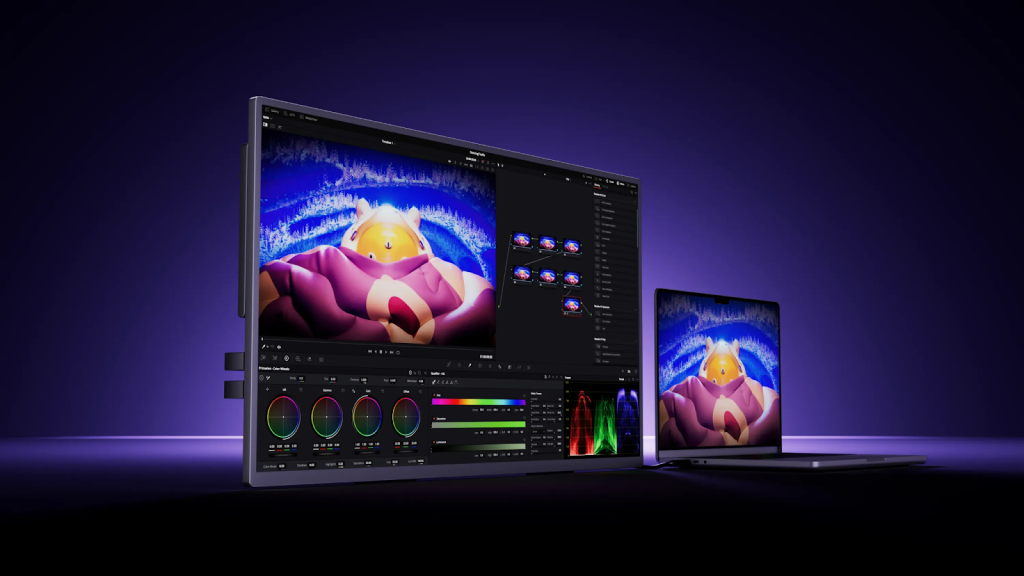
Some displays fold from 22 inches to just 16 inches, and you can easily slip them into your bag because they are portable monitor with battery.
Top Visual Quality
Another big point is visual performance. These screens use OLED panels that show:
- 3K resolution (2880×1800)
- 120Hz refresh rate
- 100% DCI-P3 color coverage
- 1ms response time
These are serious specs. This means the display shows accurate and rich colors, ideal for people who edit photos or videos. Even for movies, gaming, or design, the screen shows true blacks and bright whites — something that regular LCD screens can’t always match.
Very Touch Friendly
Touchscreens are already common now. But these flexible OLED screens support 10-point multi-touch, which means you can use gestures like zoom, swipe, rotate, etc., all with simple finger movements. It’s very responsive and works well without delay. You don’t need a mouse or keyboard for small tasks.
Easy Setup
Another nice part, they often work with a single Type-C cable. So there’s no headache of using 4 or 5 wires just to connect your screen. Just plug in one cable, and you’re ready — power and video both come through the same cable. They also come with adjustable stands (sometimes magnetic), so you can set them up in your office, coffee shop, or even in your hotel room in no time.
Some Use Cases You’ll Probably Relate To
Creative Work
People who work with design, animation, or photo editing need good color and sharp resolution. Flexible OLED screens with DCI-P3 support and 3K resolution help them see every little detail, so they can work more confidently.
Remote Jobs
If you’re working from home or traveling for business, a foldable display saves space but still gives you a full dual-screen experience. Just unfold it and start working — no installation, no extra driver.
Gaming and Fun
Even gamers will love this. With a 120Hz refresh rate and 1ms response time, it keeps up with fast movements. Whether it’s racing games or action, the experience is smooth.
Vist Fortec.us for more details
Let’s Make It Easy to Compare
Here’s a simple comparison table that shows why flexible display polymers are being used in such products:
| Feature | Traditional Display | Flexible OLED Display |
| Material Base | Glass | Flexible Polymer |
| Thickness | Usually 15–25mm | Only 7mm |
| Foldable | No | Yes |
| Weight | Heavier | Lightweight |
| Touch Function | Sometimes | 10-point Touchscreen |
| Color Accuracy | Medium | 100% DCI-P3 |
| Refresh Rate | 60Hz | 120Hz |
| Response Time | 5–8ms | 1ms |
| Portability | Low | High |
Long-Term Durability
One thing that really matters is how long a screen can last if it’s being folded often. Here, flexible oled display made using these polymers are tested to go through 30,000 folds without any trouble. That’s enough for everyday use for years. The hinge design and screen materials work together so there’s no pressure on one part. This prevents cracks or permanent bending marks.
Where Are These Screens Being Used?
Flexible OLED displays using such polymers are now starting to appear in:
- Foldable laptops
- Portable dual monitors
- Travel-friendly screens for editing or working
- Mobile gaming setups
- Business presentation tools
The kind of portable laptop monitor with such a flexible screen is equipped with high definition resolution, touchscreen support, and a foldable design. For technical details and compatibility information, if you want a screen that not only displays sound and images, but also has those images woven into its very fabric.
Final Thoughts
Flexible display polymers are not just some new buzzword. They’re the base behind a whole new way to use screens, foldable, colorful, lightweight, and ready for wherever you want to go. From work to entertainment, these materials are changing how we think about portable screens. They help you create more, carry less, and enjoy your content in better ways, all while keeping things stylish and simple.
Related videos
Video library- Gadgets and Devices
OBS Studio Display Capture Not Working on Mac? Fix it Now!
· 2:01 · 18K views
Watch on YouTube - Gadgets and Devices
Virtual Display or Virtual Monitor in Windows 11 | Step-by-Step Tutorial with Demo
· 3:08 · 13.8K views
Watch on YouTube
Keep reading
 Gadgets and DevicesWhat to check before buying an Android PoS machine for your store?Choosing the right Android PoS machine is a critical decision for any store owner. The device you select can significantly impact daily operations, customer · 4 min read
 Gadgets and DevicesDrone Use in Business: From Visual Storytelling to Site Insightssource · 5 min read
 Gadgets and DevicesBridge the Communication Gap: Exploring New Horizons with OPPO Reno15 5GTraveling to new destinations requires specific preparation. When tourists travel abroad or explore remote domestic regions, they frequently face language and · 3 min read