
A caller asks for an appointment, hears a friendly confirmation, and hangs up. The calendar remains empty. Whoever answers the next call now has two problems: finding a slot and explaining why the first promise was wrong. For the person connecting a phone system to a calendar, the spoken answer is only one part of the transaction.
An AI Phone Agent needs a booking workflow that distinguishes a requested time from a saved appointment. Air Sound AI supports calendar connections and booking flows. The implementation work is to make the caller’s confirmation depend on the calendar result, with a clear way to recover when that result is missing or ambiguous.
Define What Counts as a Confirmed Appointment
Write down the evidence you need before the agent says an appointment is booked. A successful conversation is not enough. The destination calendar should contain the intended service, location, time, and contact details, or the equivalent fields your booking system uses. The record must also be visible to the staff expected to honor it.
Consider a repair business with two locations. A caller asks for the nearer branch, then changes the requested day after hearing the available times. The final record has to reflect both choices. Saving the original date at the wrong branch is a completed write operation, but it is still a failed booking. Review the content of the record as well as whether one exists.
Keep three outcomes distinct: the caller requested an appointment, the system saved it, and someone still needs to resolve the request. These distinctions should guide the wording on the phone. “I have recorded your preferred time for a callback” gives a different expectation from “Your appointment is confirmed.” Use each only when the underlying result supports it.

Build the Booking Flow Around Calendar Results
Air Sound AI combines a visual workflow builder with knowledge sources and connections to business systems. Its setup proceeds through importing knowledge, designing the workflow, selecting a voice and language, and going live. Follow that sequence with one appointment type before adding rescheduling, cancellations, or several service locations.
Prepare the Service Information Callers Actually Need
Import the relevant service information from a PDF, website, or help center. Check that it answers the questions people ask before choosing a time: which branch performs the work, what the appointment covers, and whether any preparation is needed. Remove obsolete instructions from the material used for this flow so the caller is not guided by an old service description.
Keep explanatory information separate from current availability. A page describing opening hours cannot establish that a particular slot is free. Use the calendar or booking system for that decision. Before enabling bookings, make sure the connection can read the availability it needs and create records in the intended calendar, using a test appointment that staff can inspect.
Design the Success and Unfinished Booking Paths
In the workflow, connect the booking action to a response that reflects its outcome. On success, confirm the saved details. If the appointment cannot be completed, collect the information required for follow-up and explain that it is still pending. Decide who receives that unfinished request before the first caller reaches this branch.
Air Sound AI supports configurable fallback actions such as creating a ticket or marking a case for follow-up. Test the route you choose against the connected system. An appointment request left in an unmonitored destination is not a useful recovery path, even if the phone agent handled the conversation politely.
A broader choice may be whether callers need an automated conversation at all. The comparisons on the Air Sound Blog cover AI agents, phone menus, and human receptionists. For a booking integration, focus that decision on the task: can the caller choose a valid slot and receive an accurate answer about whether it was saved?
Choose a Voice Callers Can Correct Easily
Select the voice and language, then listen to the exchange with realistic names and appointment details. Pay attention to the moment when the agent repeats a date or branch. The caller needs an opportunity to correct it before the booking is treated as final. A pleasing voice will not compensate for a confirmation delivered too quickly to challenge.
Make corrections part of the rehearsal. Ask for one time, change it, and inspect the saved result. If the system speaks the corrected time but retains the earlier value, changing the greeting will not help. Trace which value reached the booking action and where the conversation stopped updating it.
Launch With a Visible Recovery Route
Start with a small portion of the relevant calls and have someone review the resulting appointments. Compare what callers requested with what staff can see in the calendar. Keep the ordinary booking route available while resolving mismatches. Expanding to more appointment types should follow evidence that this narrow flow behaves consistently.
Check Failures That a Smooth Demo Can Hide
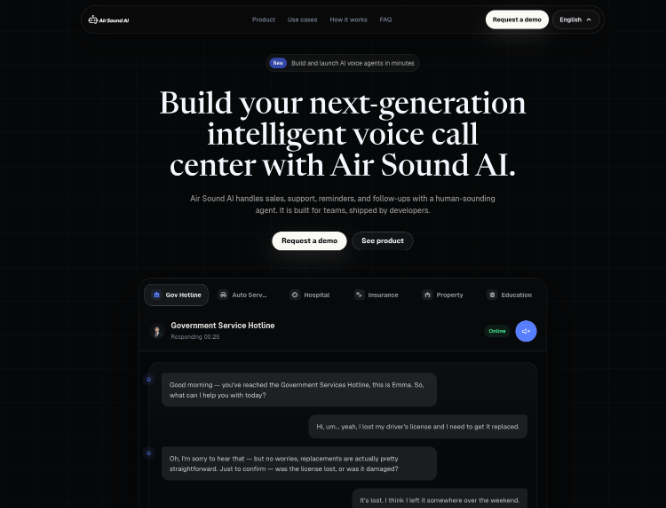
Preview calls in Air Sound AI let teams rehearse knowledge responses, intent handling, and handoff rules. Give a colleague an unavailable slot to request, then have them switch branches. After the call, open the appointment in the staff calendar and compare the location with the last confirmation the caller heard. That comparison identifies which part of the flow needs repair.
A missing response from a booking service needs particular care. It may mean the request failed, or that a record was created but the acknowledgment did not reach the caller’s workflow. Before retrying, check the destination for the appointment. Where the connected system supports a request identifier or duplicate-prevention mechanism, include it in the integration design. Otherwise, route an uncertain result for review.
Repeat the call using the same contact and requested time. Determine whether the workflow recognizes an existing booking or creates another one. This matters when a caller hangs up during a pause and tries again. The second conversation should not quietly create a duplicate that staff discover only when preparing the day’s schedule.
Test a rejected write as well. Use a controlled test calendar where a booking cannot be created, and listen to the response. The agent should not announce success just because it collected every required detail. Then verify that the unresolved request reaches its assigned destination with enough information for a person to finish it.
Check the appointment length as well as its start time. A service that occupies an hour cannot safely inherit the shorter slot used by another service. Have staff inspect the end time and assigned resource in the test record. Correct service rules at the booking destination before trying to compensate with longer phone instructions.
Keep the Calendar as the Final Booking Record
A booking flow is ready to expand when the calendar, the caller’s understanding, and the staff’s view agree. Keep reviewing mismatches after changes to service information or calendar permissions. A previously working connection still needs attention when the business changes the system behind it.
Air Sound AI is a candidate for teams that can connect a bounded appointment task to a reliable destination. If staff must approve every request manually, make that pending status explicit. The most useful automation gives callers a dependable next step and leaves the booking team with records it can trust.